

Essential Football Skills Training: Build Better Fundamentals
If you want to become a better football player, mastering the fundamentals is one of the best places to start.
Football requires more than speed, strength, or natural athletic ability. Good players develop technique, coordination, awareness, and confidence through consistent practice. Whether you're preparing for tackle football, flag football, or simply trying to improve your game, building a strong foundation can make a noticeable difference on the field.
Every position requires a different combination of abilities, but skills such as footwork, catching, ball security, blocking, tackling, throwing, and understanding the game all contribute to becoming a more complete football player.
Why Football Skill Training Matters
Football moves quickly. Once the ball is snapped, players often have only seconds to recognize what's happening, make a decision, and react.
That's why football skill training is so important.
Practicing fundamental movements repeatedly helps players develop muscle memory. Over time, movements that once required a lot of thought can become more natural.
Effective football training can help players improve:
Throwing mechanics and accuracy
Catching and ball tracking
Route running
Footwork and agility
Speed and change of direction
Ball security
Blocking and defensive technique
Football IQ and field awareness
Athletic ability certainly helps, but technique allows players to get more out of that athleticism.
A player who understands how to move efficiently, maintain proper positioning, and recognize what's happening on the field can often play faster and with more confidence.
Essential Football Skills Every Player Should Develop
Football is a position-specific sport. A quarterback and offensive lineman aren't going to train exactly the same way.
However, understanding the fundamental skills of the game can help any player become a better overall football player.
1. Throwing and Passing
For quarterbacks, throwing isn't simply about having a strong arm.
Accuracy, footwork, timing, mechanics, and decision-making all contribute to effective quarterback play.
Young quarterbacks should first focus on developing consistent mechanics and learning to deliver an accurate football. As they progress, training can become more advanced by incorporating different routes, movement, timing, defensive reads, and pressure.
A quarterback who can consistently put the football in the right place gives the offense a much better opportunity to succeed.
2. Catching and Ball Tracking
Catching isn't only a wide receiver skill.
Running backs, tight ends, defensive backs, linebackers, and even quarterbacks in certain situations may need to catch and control the football.
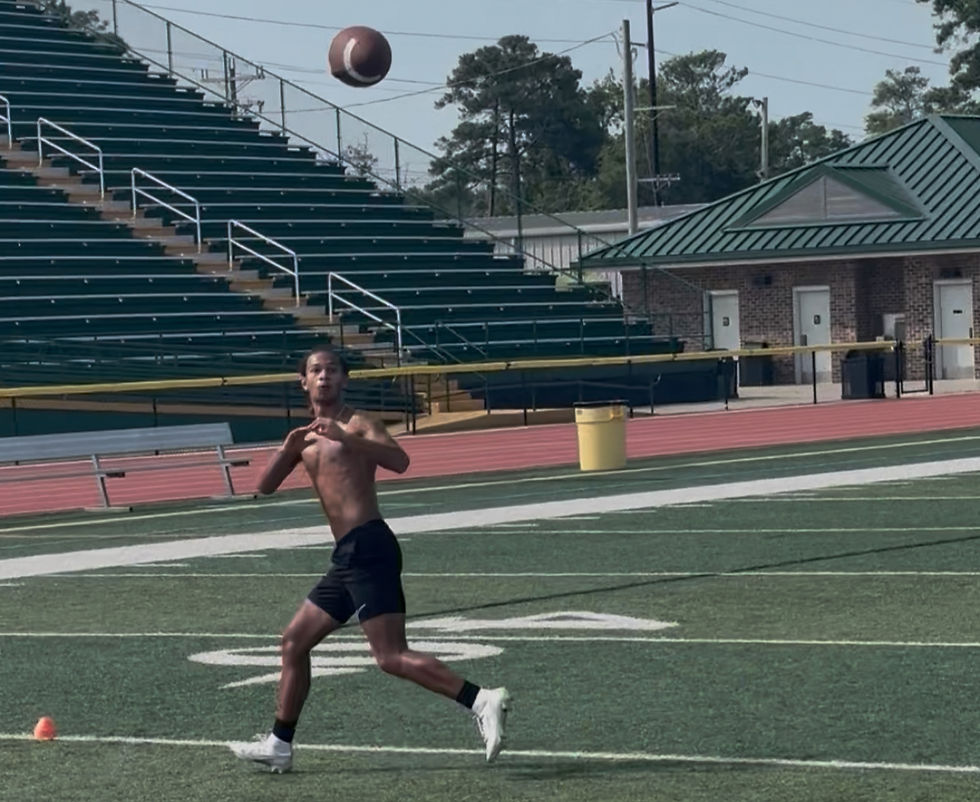
Players need to learn how to track the ball through the air, position their hands correctly, adjust to throws, and secure the football after making the catch.
Basic catching practice can build hand-eye coordination, but players eventually need to become comfortable catching while running, changing direction, or dealing with pressure from a defender.
3. Route Running
Receivers need more than speed to consistently get open.
Good route running combines footwork, body control, timing, acceleration, spacing, and an understanding of defensive leverage.
Players generally begin with fundamental routes such as slants, outs, ins, curls, posts, corners, and go routes before progressing into more advanced concepts.
Learning to run routes under control is important. Simply knowing where the route ends isn't the same as knowing how to run it effectively.
4. Footwork and Agility
Footwork affects nearly every position on the football field.
Quarterbacks use footwork to set themselves to throw. Receivers need it to release and make cuts. Running backs use it to change direction. Defensive backs rely on it in coverage. Linebackers need it to react and pursue. Offensive and defensive linemen need good footwork to maintain leverage and positioning.
Simple cone and agility exercises can help develop coordination and change-of-direction ability, but technique matters more than simply completing a drill quickly.
Players should learn how to stay balanced and efficient before increasing the speed or difficulty of the movement.
5. Running and Ball Security
Anyone carrying the football needs to protect it.
Running backs and receivers may get the most opportunities, but quarterbacks, returners, and other players also need good ball security.
Players should become comfortable maintaining control of the football while accelerating, changing direction, absorbing contact in tackle football, or avoiding defenders in flag football.
Ball security isn't the most exciting skill to practice, but turnovers can completely change a game.
6. Blocking
Blocking is one of the most important fundamentals in tackle football.
Offensive linemen rely on blocking technique every play, but running backs, tight ends, and receivers may also have blocking responsibilities.
Effective blocking requires proper stance, footwork, balance, hand placement, leverage, and an understanding of the assignment.
Strength can certainly help, but successful blocking isn't simply about overpowering another player. Technique and positioning are extremely important.
Because blocking can involve contact, younger players should learn proper technique with qualified coaching rather than simply practicing full-contact repetitions on their own.
7. Tackling and Defensive Technique
Defensive football requires players to recognize what's happening, maintain good positioning, pursue the football, and finish the play.
In tackle football, proper tackling technique is especially important because poor technique can increase the risk of injury.
Players should learn tackling fundamentals through qualified coaching and controlled progressions rather than trying to practice full-contact tackling without supervision.
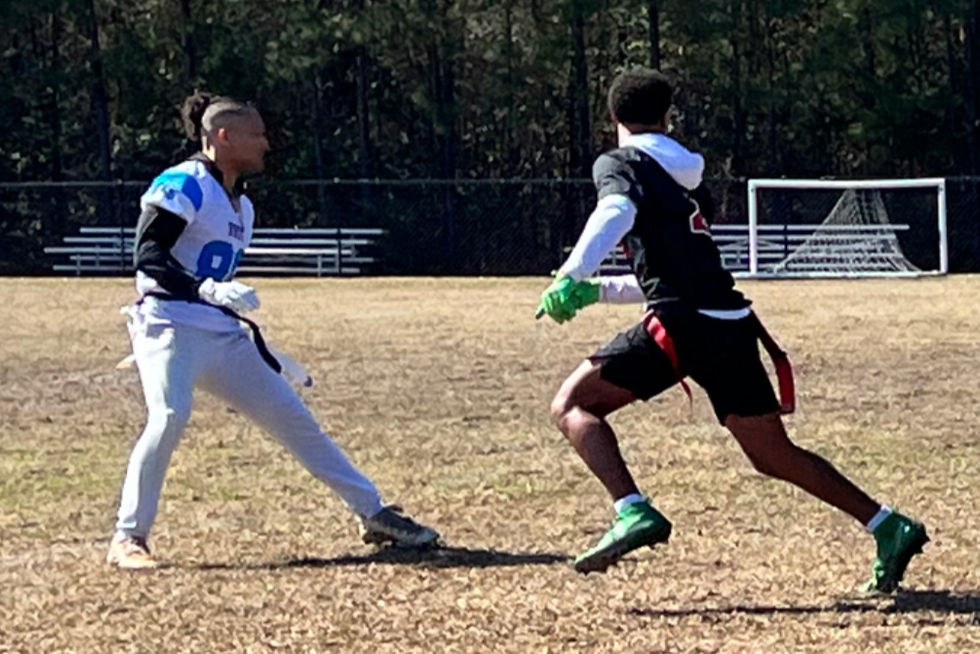
In flag football, defenders finish plays differently by pulling the ball carrier's flag, but many of the skills leading up to that moment are similar: pursuit angles, positioning, footwork, discipline, and reacting to the ball carrier.
8. Speed and Change of Direction
Football speed isn't just about running a fast 40-yard dash.
During a game, players repeatedly accelerate, stop, turn, react, and change direction.
A running back may have to make a cut and accelerate through an opening. A defensive back may need to change direction when a receiver breaks on a route. A linebacker may have to react to a run before pursuing the ball carrier.
That's why acceleration, reaction ability, and change of direction are important parts of football athleticism.
Short sprints and controlled change-of-direction exercises can provide a foundation before progressing into more football-specific movements.
What Are the Most Important Basic Skills in Football?
There isn't one perfect list because football has so many different positions.
Instead, players should think about several major areas of development.
Passing and catching are fundamental to the passing game and require accuracy, timing, coordination, and concentration.
Running and ball security involve acceleration, vision, balance, change of direction, and protecting the football.
Footwork and agility affect almost every position and allow players to move efficiently while maintaining balance and control.
Blocking and defensive technique help players win individual matchups, maintain leverage, and execute their responsibilities.
Football IQ connects all of these physical skills.
Understanding formations, assignments, routes, coverage, leverage, down and distance, and situational football allows players to make better decisions on the field.
The best players don't simply move well. They understand why they're moving and what they're trying to accomplish.

Why Technique Matters as Much as the Drill
Finding football drills online is easy.
Performing those drills correctly is another story.
Two players can complete the exact same drill and develop completely different habits depending on their technique.
Running around cones, for example, doesn't automatically create better footwork. Body position, balance, foot placement, acceleration, and the ability to transition the movement into a football situation all matter.
The same principle applies to throwing, catching, route running, blocking, defensive movement, and nearly every other football skill.
That's why quality repetitions are more valuable than simply doing more repetitions.
Players should focus on learning movements correctly first. Speed, complexity, resistance, and competition can be added as the player's technique develops.
Tips for Improving Your Football Skills Consistently
Becoming a better football player takes time.
Instead of trying to improve everything during one workout, players can benefit from identifying specific areas to develop and building them gradually.
A few principles can make training more productive:
Focus on technique before speed.
Understand the purpose of each drill.
Train weaknesses instead of only practicing strengths.
Prioritize quality repetitions over quantity.
Gradually increase difficulty as skills improve.
Apply skills in realistic football situations.
Stay consistent.
Players can accomplish plenty through individual practice, especially when working on basic movements.
But eventually, football skills need to be tested in realistic situations.
A receiver has to learn how to get open against a defender. A defensive back has to react to an actual route. A quarterback has to make decisions based on what the defense does. A blocker has to respond to an opponent who isn't moving exactly as expected.
Those competitive repetitions are an important part of turning practice into performance.
Taking Your Football Skills to the Next Level
Individual practice is a great place to start, but coaching becomes increasingly valuable as players develop.
A coach can identify small issues with throwing mechanics, footwork, catching technique, route running, positioning, or other movements that players may not recognize themselves.
Structured football training can also introduce new challenges as players improve rather than having them repeatedly perform the same drills.
For athletes in the Myrtle Beach area, the Myrtle Beach Football League (MBFL) provides another opportunity to develop and apply many of these football fundamentals.
MBFL offers organized flag football along with MBFL Training, where players can work on transferable football skills such as throwing, catching, route running, footwork, defensive movement, speed, and overall technique.
While tackle and flag football have important differences, many of the fundamental skills developed through football training can carry over between different versions of the game.
Players and parents can also explore our youth football techniques resources for more information about developing football fundamentals.
Keep Building Your Game
There isn't one drill or workout that turns someone into a great football player.
Development happens gradually.
Start by learning the fundamentals correctly. Get quality repetitions. Understand why you're performing each movement. Then gradually increase the speed, difficulty, and competition as you improve.
Football players at every position have different responsibilities, but the same basic principle applies:
Whether you play tackle football, flag football, or both, becoming a better player comes down to consistent work, good technique, and a willingness to keep learning the game.




Comments